

If you've been meaning to try our Sarson ka Saag & Makki ki Roti, this is your sign.
We've just heard from our supplier that fresh mustard green season is coming to an end. We'll keep making our saag for as long as we can source beautiful, fresh greens. But once the season finishes, so does the dish. It'll return next winter, just as it should—but for now, we're approaching the final few weeks.
Some dishes are meant to disappear. That's what makes them worth waiting for.
One of the questions we get asked quite often is, "Why don't you serve Sarson ka Saag all year?" It's a fair question. After all, if people love a dish, surely it makes sense to keep it on the menu.
The answer is simple: because that's not how we grew up eating it. Sarson ka Saag has always been a winter dish, and for us, keeping it seasonal is part of respecting the tradition it comes from.
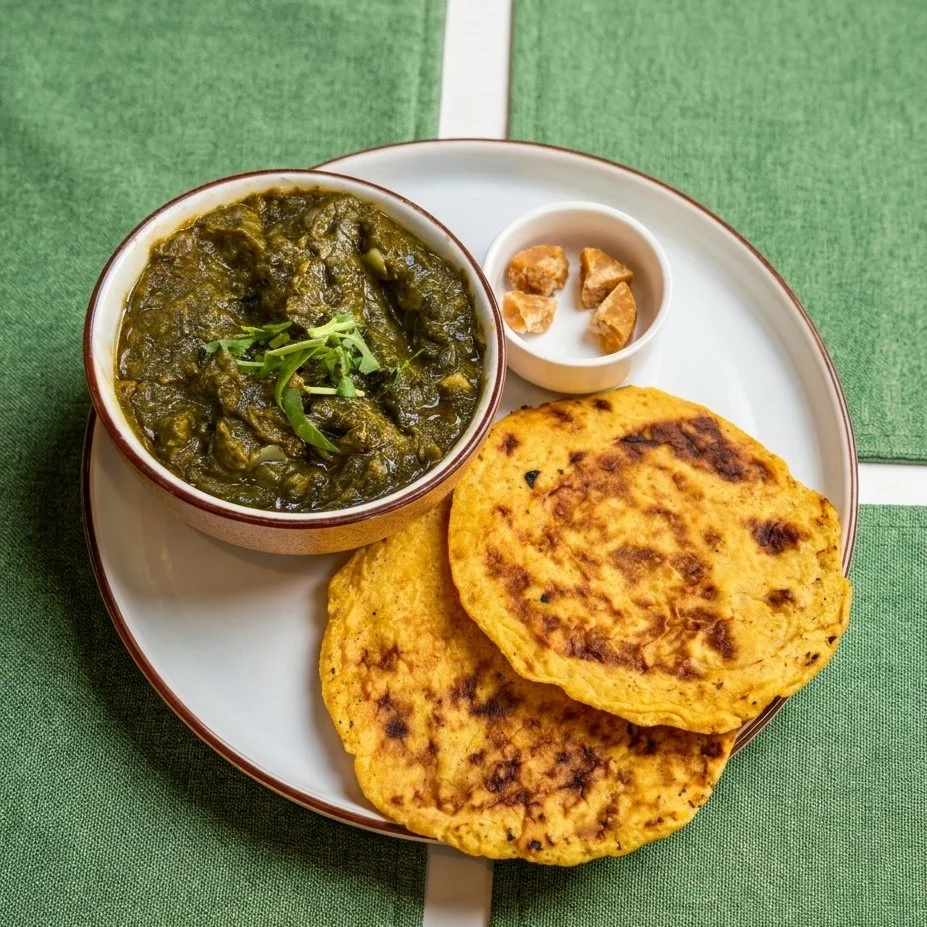
Sarson ka Saag with Makkai Roti & Jaggery
Across North India, winter announces itself in many ways. The mornings become crisp, the blankets get heavier, and roadside tea somehow tastes even better. But perhaps the most unmistakable sign is when mustard fields bloom into bright yellow carpets and fresh bundles of mustard greens begin appearing in markets.
That's when homes start making saag. Not because someone declared winter "saag season," but because nature already had.
Sarson ka Saag isn't a recipe that belongs on a calendar. It belongs to a season.
For generations, Indian cooking has followed the rhythm of the seasons. We ate what was growing around us, not what could be shipped across the country or stored in a freezer. Festivals had their own foods, summers had theirs, and winter arrived with dishes that warmed you from the inside out.
Somewhere along the way, we've become used to expecting everything to be available all the time. Convenience has become normal, but we've quietly lost something in return—the excitement of waiting.
That anticipation is part of what makes Sarson ka Saag so special. You know it won't be around forever, so when winter arrives, you make the most of it. Families cook it, neighbours share it, and before long, the season changes again.
Maybe that's one of the reasons it creates such strong memories. Not just because it's delicious, but because it always knew when it was time to leave.
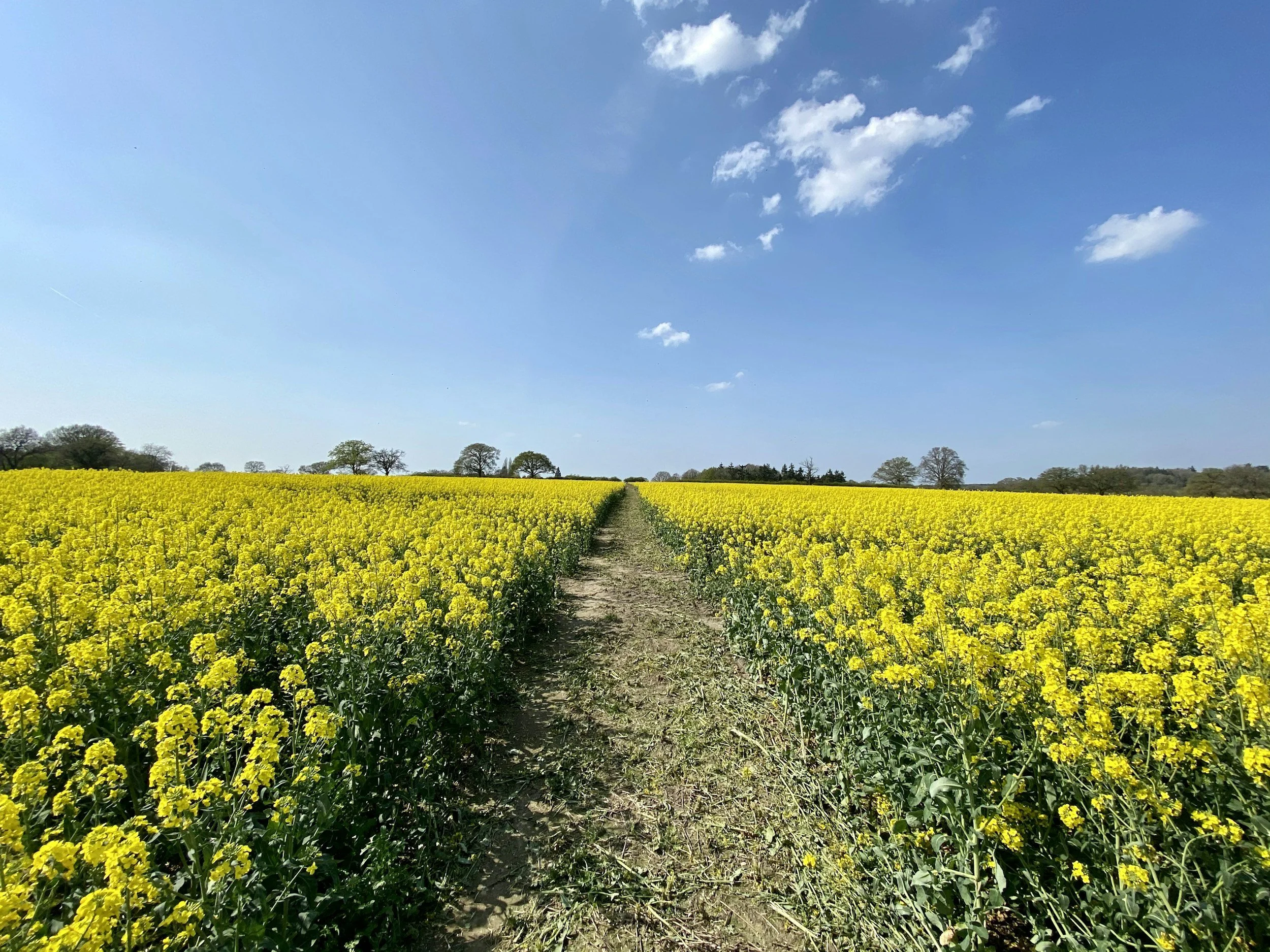
Mustard field in bloom | PC @willjones2001
When we decided to put Sarson ka Saag on our winter menu, we made another decision alongside it. We wouldn't keep making it once fresh mustard greens disappeared. We could use frozen greens or compromise on quality, but that wouldn't be the food we want to serve.
If a dish is built around one beautiful ingredient, then that ingredient deserves to be at its best.
Fresh mustard greens. No shortcuts. No second-best.
Our version is served the way we love eating it—with Makki ki Roti and jaggery. It's comforting, deeply satisfying, and exactly the kind of meal we crave when the weather turns cold.
It's also one of the dishes we're proudest to have introduced this winter, and the response from our guests has been incredibly encouraging.
So if you've been thinking, "We'll come in one weekend and finally try the saag," consider this your gentle reminder.
We're making it every day for as long as fresh mustard greens are available. Once the season ends, so does the dish—and we'll happily wait another year for its return.
After all, some things are worth waiting for.